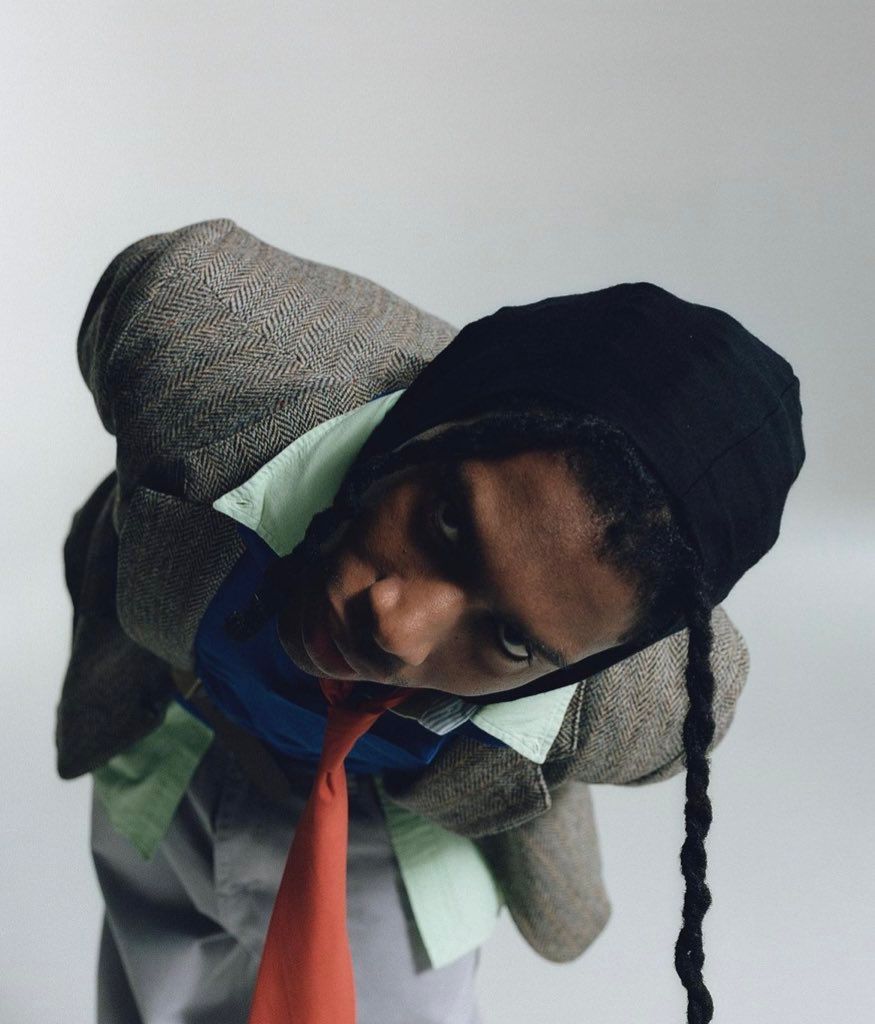
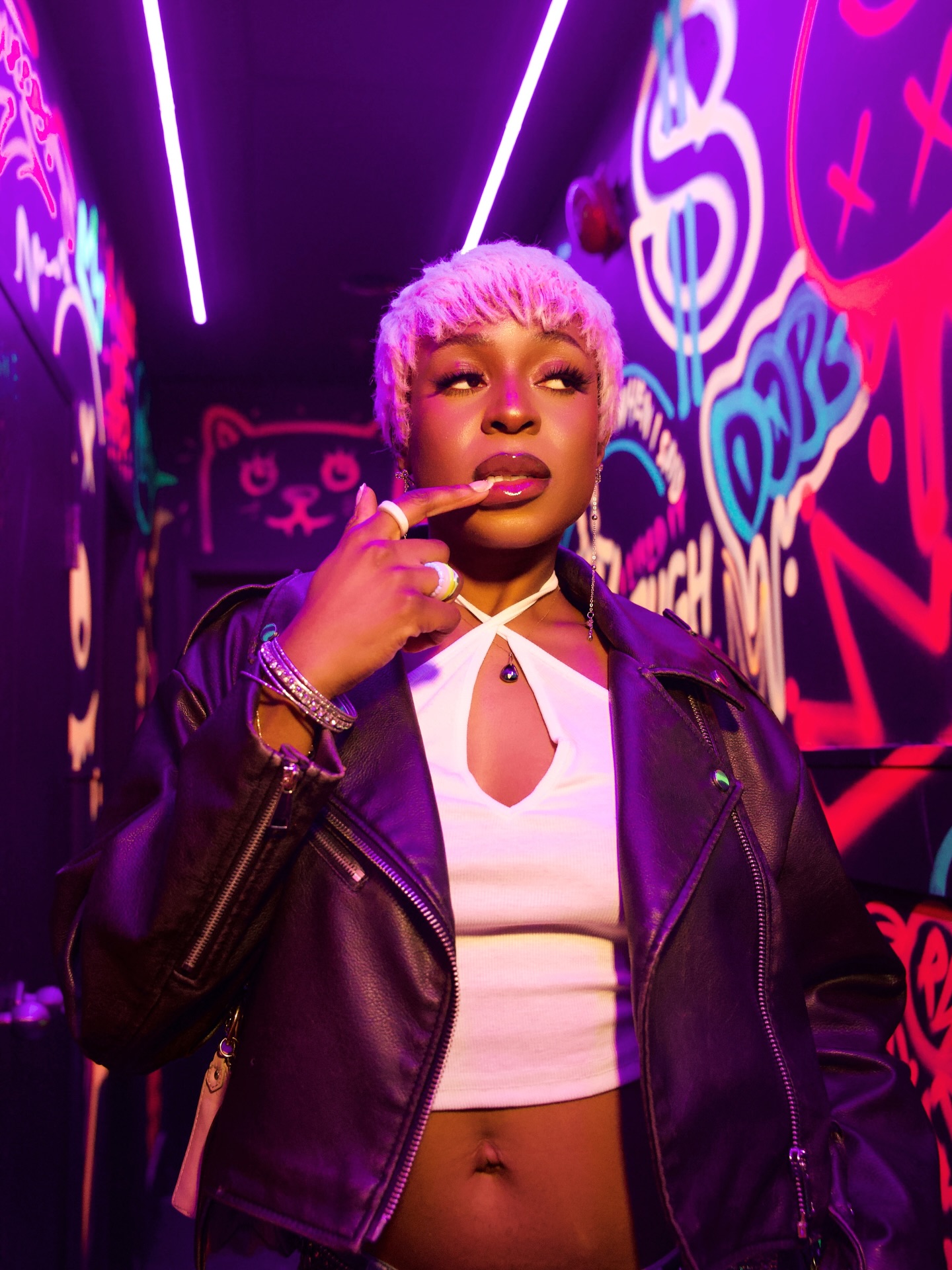
Obasola Akintola is not your typical design story. No formal training, no straight path, just a geology student at Obafemi Awolowo University who found Photoshop, got obsessed, and refused to quit. Today, he is a Senior Brand Designer at Chowdeck, one of Nigeria’s most recognisable food-tech brands, and the brain behind Design’s Not Dead, a growing community event that is quietly changing how designers in Lagos connect and create. We sat down with him to talk about the journey, the process, and why the internet has no room for shyness.
NoteS: You studied Geology at OAU. Walk us through how design even entered the picture.
Obasola: So right from 100 level, I joined a church, and I just knew I had a creative side, but I had no idea what it was or how it was going to play out. I had a thing for colours — I would download wallpapers on Pinterest, save them on my phone. Then they added me to the church design team in 200 level, but I wasn’t really designing. I was just there to watch. I had this big laptop, installed Photoshop, and I couldn’t do anything. I didn’t know what to do. Someone showed me the basics but I still couldn’t get it. The few designs I made were trash. I’d send them to the WhatsApp group, and nobody would say anything. You know when you send your design and nobody responds — you just know you’ve done rubbish. So I gave up.
Then, January 1st, 2020, happened. I don’t know what happened at crossover night, but I just entered the new year with this strong resolve. I picked up my laptop that morning and just started designing. I didn’t care if I knew what I was doing. That day I made about five posters. There was this anger in me, like, I will figure this out. I started designing every single day, back to back to back. I wasn’t even doing it for money. I was just obsessed. I’d post on my WhatsApp story, and people would respond. I did free posters for friends. The first logo I got paid for — I think it was 1,500 or 2,500 naira — and I was so excited. Someone liked my work. Church still wasn’t using my designs, but I was cooking. So I kept going.
NoteS: When did you know this was actually it for you?
Obasola: I think when I got my first full-time job. The guy was paying me around 30 to 40k a month, and the work I was doing for him, I was passionate about it. People around him started noticing and asking who made the designs. Referrals started coming. That was when I realised, okay, this is real. This can actually go somewhere.
NoteS: Design has so many branches — brand design, graphic design, digital, marketing design. How did you find your lane?
Obasola: I started with graphic design, posters, flyers, music covers. That was the entry point for most people. Logos were not really my strong suit early on, but I picked up gigs here and there. Then, around 2022 to 2023, I started seeing designers online doing brand work, and I was like, I want to do that. I want to create systems for companies, build identities, and use visuals as actual solutions to problems. That was when I decided to leave posters and flyers alone. Posters & flyers will only get you so far; you need to expand your skillset as a graphic designer and go beyond doing posters & flyers into building something more solid, and even with posters & flyers, you need to get into some tough stuff like editorials, movies and all that, and be sick at it.
I found that my core strength was in brand identity, creating cohesive visual systems for brands and individuals. I tried product design at one point in 2022 when everybody was raving about it, but it just wasn’t clicking for me. I went back to brand and never looked back.
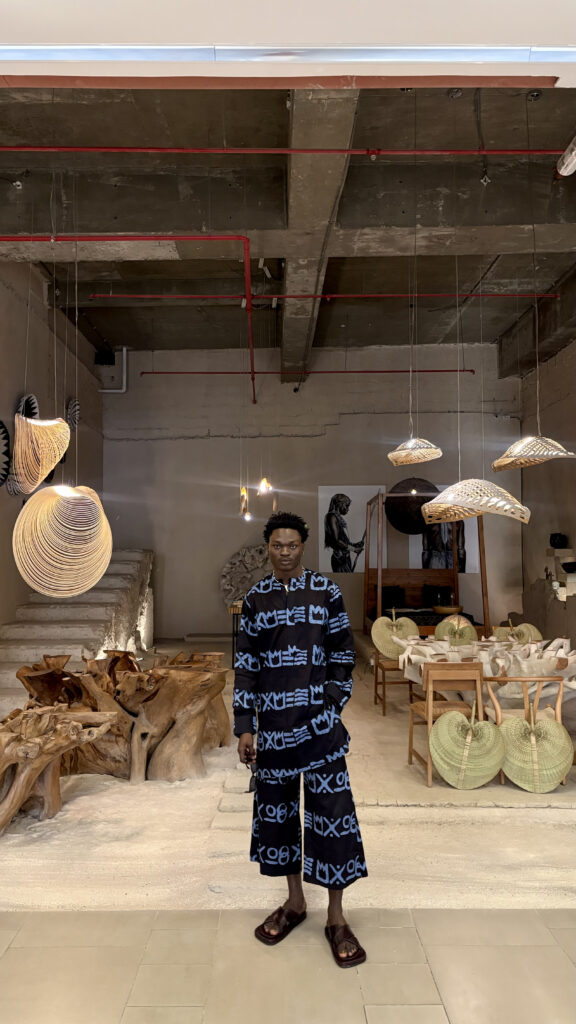
NoteS: What does your creative process actually look like from brief to delivery?
Obasola: I work in chaos and stability. For personal projects, most of the ideas just pop into my head. I’m not thinking; they just arrive, and I execute immediately. But for client work, it’s structured. First, we have a call. I need to understand the problem, the solution they’re trying to provide, their target audience, their deadlines, the cost and the full scope. After that, I go back and do my research, create a mood board, and then share those references with the client, too. It’s a collaborative effort. I’m not the only one curating ideas. Once we both agree on a direction, I make first drafts. Usually, one to three options with a clear rationale for each direction. The client picks, gives feedback, and then we execute fully.
For personal projects, though, it’s completely different. The idea comes, I open Figma, and I just go. If I start overthinking a personal project, it stops being a personal project. So I just let it flow, or I leave it.
NoteS: What happens when a client doesn’t like the work?
Obasola: First of all, God forbid they don’t know what they want, because they will stress you, but jokes aside, when a client pushes back, I remove myself from the conversation and focus on the work. It’s not about me. It’s about the work I was hired to do. So we go back to the core reason why the brand was built/created, trace our steps and see what needs to be iterated on. I ask them, okay, what from here speaks to you? Is it the colour? The mark? Do we try a wordmark, a mascot? We break it down. Because I’m always of the opinion that when a client complains, it’s not a personal attack; It’s just about finding the right solution. So you detach, and you figure out how to move forward.
NoteS: You’ve worked in fintech at Cowrywise and now in food-tech at Chowdeck. How different are those creative environments?
Obasola: With Cowrywise, the challenge initially was that it’s fintech, there are regulations, brand guidelines, and a certain expected tone. But I made sure to push within those boundaries, and when I explored something new, and it worked, it gave me the leeway to keep exploring. The main challenge there was the timelines. Everyone wants their design now.
Chowdeck is different. The design system there is very much my style, very expressive. And food is relatable; it’s daily life, so there’s a lot of creative freedom. But the challenge is context switching. You can be deep in a campaign, and someone tags you to do a printer file for a vendor in Ghana. Then someone else needs a hoodie design. Then there’s a brand guide for a new product. You’re jumping between everything constantly. And don’t even get me started on printers. You send them a design on a mock-up, and they come back with something completely different. You spend half your day explaining to the entire team why the printer did what they did. It’s a lot. But I love it.
NoteS: Where do you stand on AI in design?
Obasola: AI has elevated my work, honestly. I do not think that it’s here to take anyone’s job. You can never fully replace human creativity, never. But AI has made things faster and honestly, sweeter. Things that would take me hours, AI helps me get there quicker. Whether it’s Midjourney for illustrations, Claude, or ChatGPT, these tools help me execute ideas I might not have had the time or technical capacity to do from scratch. The key is knowing how to prompt it, knowing what you want, and then shaping the output with your own creative eye. Someone who knows how to use AI and is also creative will always have an edge over someone who doesn’t. It’s just that simple. Get with the times.
NoteS: You’ve been very deliberate about putting your work online. A lot of designers struggle with that because of imposter syndrome or fear of judgement. How do you just post?
Obasola: I think being an extroverted person by nature helped, but honestly, I had my moments too. There were times I’d post something, nobody liked it in five minutes, and I’d delete it. That happened. But I was so obsessed with the work that I just wanted to show the world what I was doing. And over time, that grew into just posting without thinking too much about it.
Here’s the truth: You don’t know who is watching. Every job I’ve gotten came from referrals, and those referrals came from people seeing my work online. Not from anyone asking for my portfolio. Cowrywise saw my work online. Chowdeck, their head of brand & marketing, had been watching my stories and posts for a long time before they reached out. That’s it. That’s the whole story.
There’s only so much that can come from posting your work, and none of it is negative. It might be shitty at first, but if you double down and keep improving, I promise you it will change. The internet is where everything is now. You don’t know where your next big break is coming from. It could be from that poster you almost didn’t post. So post it. And to anyone who says they’re too shy, if you’re hungry, nobody needs to tell you to post. When you’re truly hungry, you just do it.
NoteS: Where do you draw inspiration from outside of design?
Obasola: Everywhere, honestly. I watch cartoons a lot: Rick and Morty, Bojack Horseman, Brickleberry, Family Guy, and Big Mouth. Fashion as well. I love fashion, I used to model, and still do sometimes. But then I also have a dedicated timeline on Twitter just for global designers doing crazy work at top companies. I scroll through that regularly, take in what people are doing, and document things. And design studios, there’s no day you open my laptop without seeing seven or eight tabs of studio work I’m just browsing through. Movies. Other designers’ work. Inspiration is endless, man. It genuinely never dries up if you know where to look.
I also draw inspiration from cultural moments, cultural events, social happenings, pop culture, and the world at large. I’m deeply connected to the culture, and I see how my work can change things, send a message, and impact lives.
NoteS: You’re already at a senior level. How do you keep learning and pushing the standard higher?
Obasola: Learning never stops. Every day I see something online and think, I have not even started. If I work on something today, tomorrow I’m asking myself how I can make it better than what I did yesterday. I go online, find references, watch YouTube tutorials, and figure out how people achieved a certain effect. There’s always a new technique, making something flat versus 3D, embossed, or animated. Brands are constantly dropping new campaigns that shift what’s considered the standard. You see it and think, something can be done this way? Then you try to learn how they did it. That’s how you keep getting better. There’s no ceiling. I genuinely don’t think I’ve gotten anywhere yet.
NoteS: Tell us about Design is Not Dead. Where did that come from?
Obasola: I was going through it one evening. I was working on a project and nothing was coming. I was just scrolling and the idea just popped into my head, Design is Not Dead. I ran with it immediately. Ideas kept coming. I imagined it as an event where designers just come and do stuff and posted the concept online. It blew up. Got way more attention than I expected. Then PartyVest reached out and said let’s bring this to life. I had never organised an event in my life. I was shocked. But we started planning that same Thursday, spoke to a venue, set up tickets, and ran with it.
Over 40 to 50 people paid for that first one, and people came. And it was a success. Not a panel where a speaker comes to say things we already know, none of that. We played design games, talked about colours, typography, favourite typefaces, design principles. People were genuinely engaged. The feedback was incredible. Everyone said it shouldn’t be a one-off. So we kept going.
DND 2.0 is officially set for May 9th, 2026, and we’re hosting it at @joingoodco
Creatives. One space. Unlimited chaos!
See y’all soon pic.twitter.com/ysDSH0XwTO
— designisnotdead (@designisnotdead) April 27, 2026
NoteS: Who is it for? Do you have to be a designer to attend?
Obasola: You don’t have to be a designer at all. You just need to love design. If you’re obsessed with the art of it, the aesthetics, the conversation, the culture around it, you can show up. Design is Not Dead is about creating space for that. Because honestly, the quality of design conversation happening on Twitter in Nigeria is on the floor sometimes. People yapping about things that don’t move the needle. This event is the antidote to that. Come and actually do something. Come and create. That’s the whole point.
NoteS: Any advice for someone trying to break into brand design right now?
Obasola: The market is saturated. I won’t lie to you. But that doesn’t mean you shouldn’t enter, it just means you need to be insanely locked in. Don’t compare yourself to anyone. It’s your journey, full stop. Get off Twitter, stop watching people, and get to work. You will want to give up, I wanted to give up, probably 200 times. Don’t. Get opportunities wherever you can. And don’t try to do it alone, find people at your level, build with them, share feedback, grow together. Mentors are great in theory but we genuinely don’t have time to respond to 200 DMs. Find your tribe instead.
And pray. I’m not going to pretend there isn’t a higher power in this thing. There are people who have been grinding for years and haven’t had their break yet. And there are people who started recently and somehow everything aligned. That grace is real. So whatever you believe in, hold on to it. And come for DND.
There is a version of Obasola Akintola that gave up in 200 level when the church WhatsApp group ignored his designs. Thankfully, that version does not exist. What exists instead is a Senior Brand Designer who built his career one posted design at a time, found his voice in brand identity, and is now creating the kind of community spaces he wishes had existed when he was starting. Design’s Not Dead is his most personal project yet, and if the sold-out tickets are any indication, Lagos is ready for it.
Related: Nobody Invented the T-Shirt, But That Doesn’t Mean You Can Steal Mine