The line between referencing and copying has never been a clean one. But that ambiguity is not an excuse for blatant theft.
You’ve seen this happen as long as you’ve been in the fashion industry: a brand drops something similar to what another brand dropped, and it instantly turns into a controversy. One side screams plagiarism while the other side insists everything’s been done before. Both sides are usually wrong, or at least incomplete.
The real conversation about originality, reference, and copying in streetwear is far more nuanced than that. It requires understanding how design actually works, how streetwear was built from the very beginning, and why certain creative moves that look identical are actually worlds apart.
Before anyone can call anything a copy, they need to grapple with a foundational truth: almost nothing in fashion is entirely original. Silhouettes get inherited. Color combinations recur across decades. Graphic languages evolve through mutation, not invention.
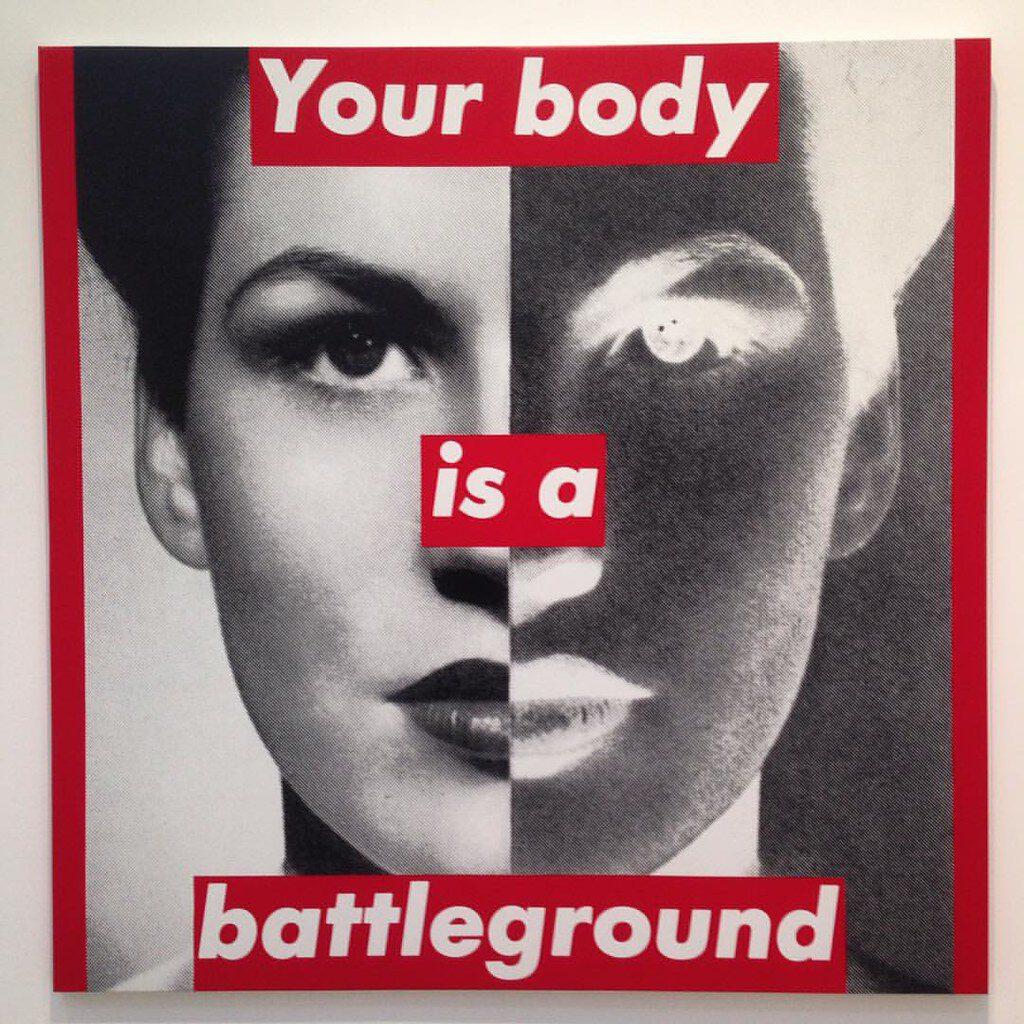
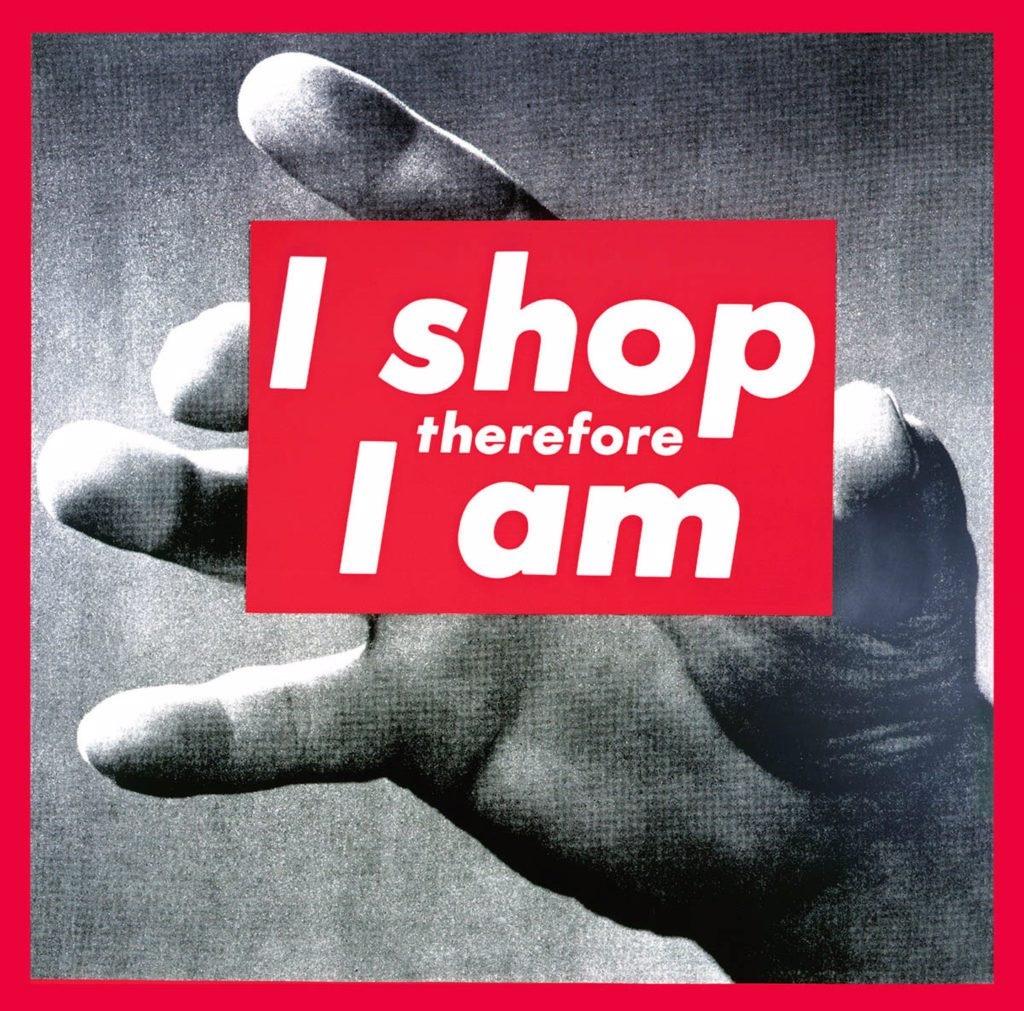
Works of American conceptual artist Barbara Kruger, created in 1989
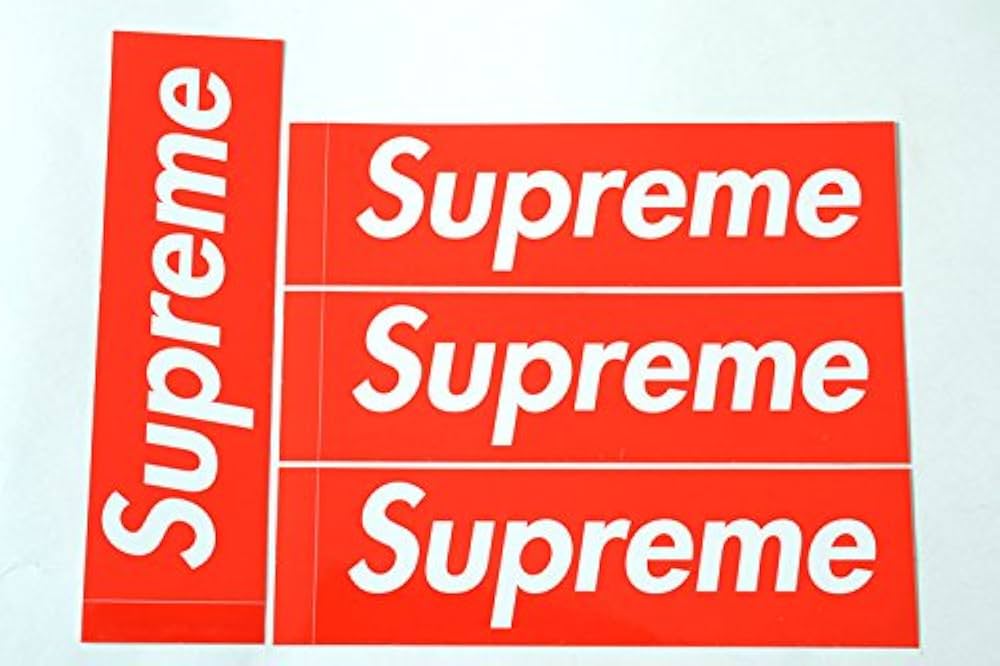
Supreme Box Logo introduced in 1994
With that now in mind, how do you still create and stay original or authentic in what you make?
There is no mythical “pure originality” in streetwear because the playing ground itself is limited. No matter how creative you get, you’re still working with the same core building blocks: tees, hoodies, cargo pants, track pants, oversized jackets, beanies, and sneakers. You can distress them, graphic them up, but at the end of the day, it’s still a T-shirt, still a pair of track pants, still a hoodie. Streetwear mostly rewards reimagination, not total reinvention. You can push the boundaries, but a complete overhaul usually stops feeling like streetwear anymore.
Virgil Abloh, perhaps the most debated designer of his generation, articulated this more honestly. During a lecture at Harvard in 2017, he outlined what he called his “3% Approach”, the idea that a creative only needs to change something by 3% to generate a genuine cultural contribution. He compared it to DJing: a DJ takes James Brown, chops it up, and makes something new. A designer adds holes to an iconic handbag and leaves his mark.
“Streetwear in my mind is linked to Duchamp. It’s this idea of the readymade. It’s like hip-hop. It’s sampling. I take James Brown, I chop it up, I make a new song.”
— Virgil Abloh, The New Yorker, 2019
The criticism of this philosophy, and there was plenty, is that it gave Abloh cover to repackage other people’s work and call it innovation. On a surface level, that argument makes sense. But it also misses the point he was making. The 3% rule was never a license to copy; it was a description of how creative progress has always worked. You build on what exists. It functions as a rebuttal to the idea of radical originality and purism. The real question is how you build, and whether your departure creates something that can stand on its own.
Philosopher Nicolas Bourriaud articulated something similar long before streetwear became a global conversation. In his 2001 book Postproduction: Culture as Screenplay – How Art Reprograms the World, he described how, since the early 1990s, more and more artists had been creating new works by interpreting, reproducing, re-exhibiting, or reusing preexisting artworks and cultural products. In this framework, the DJ and the programmer are the model creatives of the modern era: selecting cultural objects and embedding them in new contexts. Abloh’s 3% rule is simply that framework wearing a hoodie.

What this means practically: a shared silhouette does not make two pieces copies of each other. Design elements, too, can collide independently. Two designers in different cities, each steeped in the same cultural moment, can arrive at the same graphic language.
A shared silhouette is not theft. A shared intention without a shared voice is where copying begins.
There is something you should also note that is very prevalent in streetwear: logo flipping. It is a core part of the culture. Taking logos from non-fashion companies, Religious bodies, government agencies, fast food chains, courier services, and repurposing them as garments is a classic move. A well-executed flip of the FedEx logo, the Morton Salt girl, or, in Nigeria, the RCCG crest or the SuperSports logo (and many more) feels subversive, witty, and deeply rooted in the earliest days of skate culture: take the corporate world’s visual language, strip it of its original meaning, and wear it as irony or identity 
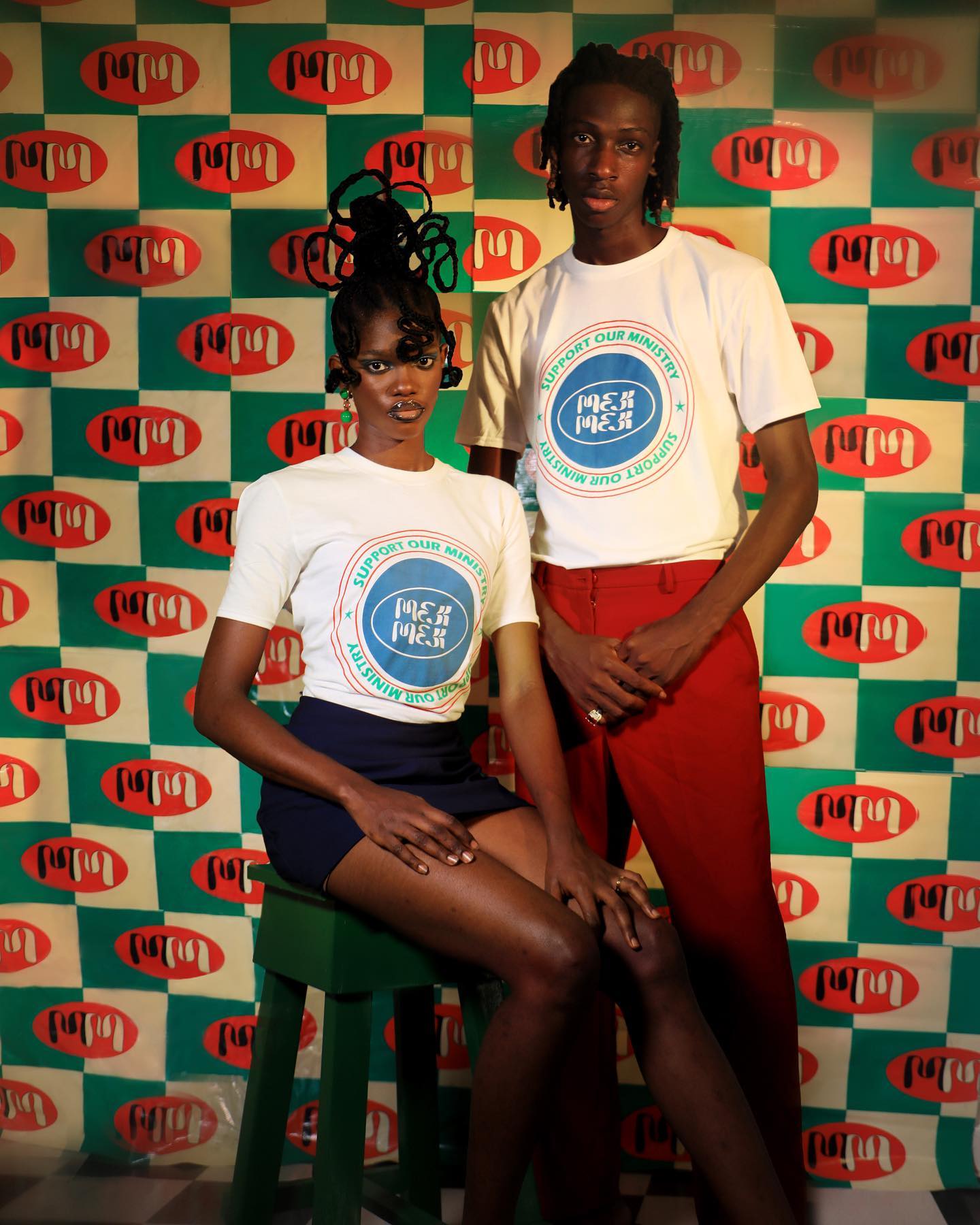
Redeemed Christian Church of God (RCCG) logo, reimagined by Nigerian streetwear brand Meji Meji.

This practice works because of what it does to the source material. FedEx does not make clothes. RCCG does not have a streetwear line. When you put their logo on a piece, you are commenting on something, on logistics as aesthetics, on the visual saturation of corporate branding, or on the way modern life is mediated through delivery boxes and shipping labels. The act has meaning because there is clear distance between the source and the destination.
A note on parody law:
Fashion lawyers note that the key legal tests are whether there is actual consumer confusion between the two brands and whether there is dilution of the original trademark. The cultural and legal status of a logo flip depends heavily on whether the source is a fashion brand competing in the same market or a corporation from an entirely different world.
But the fact that streetwear has a long tradition of appropriation does not grant infinite permission to appropriate anything in any direction.
If shared silhouettes are not copying, and similar aesthetics are not copying, and even logo remixing done with wit and distance is not necessarily copying, then what is? The honest answer is that copying in design is less about visual similarity and more about substitution without transformation.
Copying is when there is no transformation, no recontextualisation, and no commentary. There is only extraction: taking someone else’s creative equity and converting it straight into sales.
To put it more clearly:
Referencing is drawing from the same visual history or cultural moment, shared silhouettes, inherited forms, and parallel aesthetics that evolved independently. It means building on what already exists in order to arrive somewhere new.
Copying is reproducing a specific creative idea with minimal or no transformation, no credit, and no intent beyond commercial extraction. It’s creating near-identical products designed to substitute for the original in the same market.
Two drops can look similar because designers are genuinely working from the same cultural moment. Two drops can look different but one can still be profoundly derivative, lifting a creative framework, a concept, an approach, while making sure the surface-level visuals are distinct enough. Copying is not always visible in a side-by-side. And similarity is not always evidence of theft.
Even in all this nuance, there is still blatant theft, straight-up style-for-style rips with zero effort to transform, recontextualise, or add anything of value. These lazy copies should not be defended under the banner of “nothing is original.” They cheapen the entire culture and insult the intelligence of the audience.
This suggests a set of questions worth asking before reaching for the plagiarism accusation or the “everything’s been done before:”
What is the relationship between the two things? Are they working from the same cultural moment and visual history (parallel evolution), or is one clearly derived from the other (appropriation or copying)? Parallel evolution is real and common. It should not be mistaken for theft.
Is there transformation? Does the new thing do something with what it has taken, add a perspective, shift the meaning, create friction, or is it purely reproductive? A parody that makes you think is not the same as a counterfeit that hopes you do not.
Who is the source, and does the power dynamic matter? Remixing corporate visual language as commentary is not the same as extracting creative equity from an individual designer or a marginalised community. The ethics are not identical just because the gesture looks similar.
What is the target? A logo flip that comments on corporate saturation is different from a logo flip that piggybacks on another brand’s fashion equity. The source material’s relationship to your market is not a technicality. It is the whole point.
Is this blatant theft? Sometimes the answer is painfully obvious to the eye: identical positioning, exact color palette, copied logo placement, near-identical structure, and overall styling with almost zero deviation. These cases are not nuanced debates; they are straight-up rips that deserve to be called out clearly and unapologetically.
Streetwear was built on the idea that nothing belongs to anyone, that culture is collective, that remix is legitimate creative work. That is still true. But “nothing is original” was never meant to be a blanket defence of theft, it was a liberating declaration that you did not need institutional permission to make something. The same ethic that says the culture belongs to everyone also says that the people who built it deserve recognition for what they made. Those two things are not in contradiction. They are the same principle, applied honestly.
The T-shirt silhouette belongs to no one. But if you look at someone else’s specific design, reproduce it with no transformation, and sell it to their customers, you know what you did. And so does everybody else.