

Nostalgia marketing is quite simple: connect audiences to familiar moments, sounds, visuals, and eras in order to trigger a powerful emotional response.
Audiences instinctively retreat to the past in times of instability, and right now, instability is everywhere, from economic uncertainty and rapid technological change to global tensions and a lingering sense of disconnection. In search of what once was, nostalgia thrives.
Whether those times were actually better remains up for debate. But the human impulse to look backward, to reinterpret and even romanticize the past, stays constant. It’s this instinct that creates a shared emotional language, connecting people across generations regardless of when they lived through it.
Nostalgia is as much a constructed emotional familiarity as it is about personal memory. Psychologically, it acts as a buffer against stress, boosting mood and fostering optimism. In uncertain times, it offers comfort and belonging—qualities brands desperately need in a cluttered, skeptical world. Research shows that nostalgic cues can increase purchase intent, with some studies and brand observations indicating that up to 75% of consumers are more likely to buy when ads evoke sentimentality.
At its core, nostalgia works because our brains engage in “rosy retrospection”—we remember the good parts more vividly while fading out the negatives. This creates warm, positive associations that bypass rational skepticism and tap straight into emotion. During periods of anxiety or change (think post-pandemic life or AI disruption), people crave stability. Nostalgia delivers that by evoking simpler, safer feelings, even for eras we didn’t personally experience.
This isn’t just feel-good fluff; it’s strategic. Nostalgia builds trust.
“The good ‘ol days.” Film excels at nostalgia because a familiar face on screen, or even a single scene, can transport us back to moments we thought were long gone. This is why the return of The Devil Wears Prada, through its upcoming sequel, already has millions anticipating it. Nearly two decades later, the film remains a cultural touchstone, and the excitement around its revival shows how deeply it still resonates. It taps into a memory fashion audiences still hold onto.


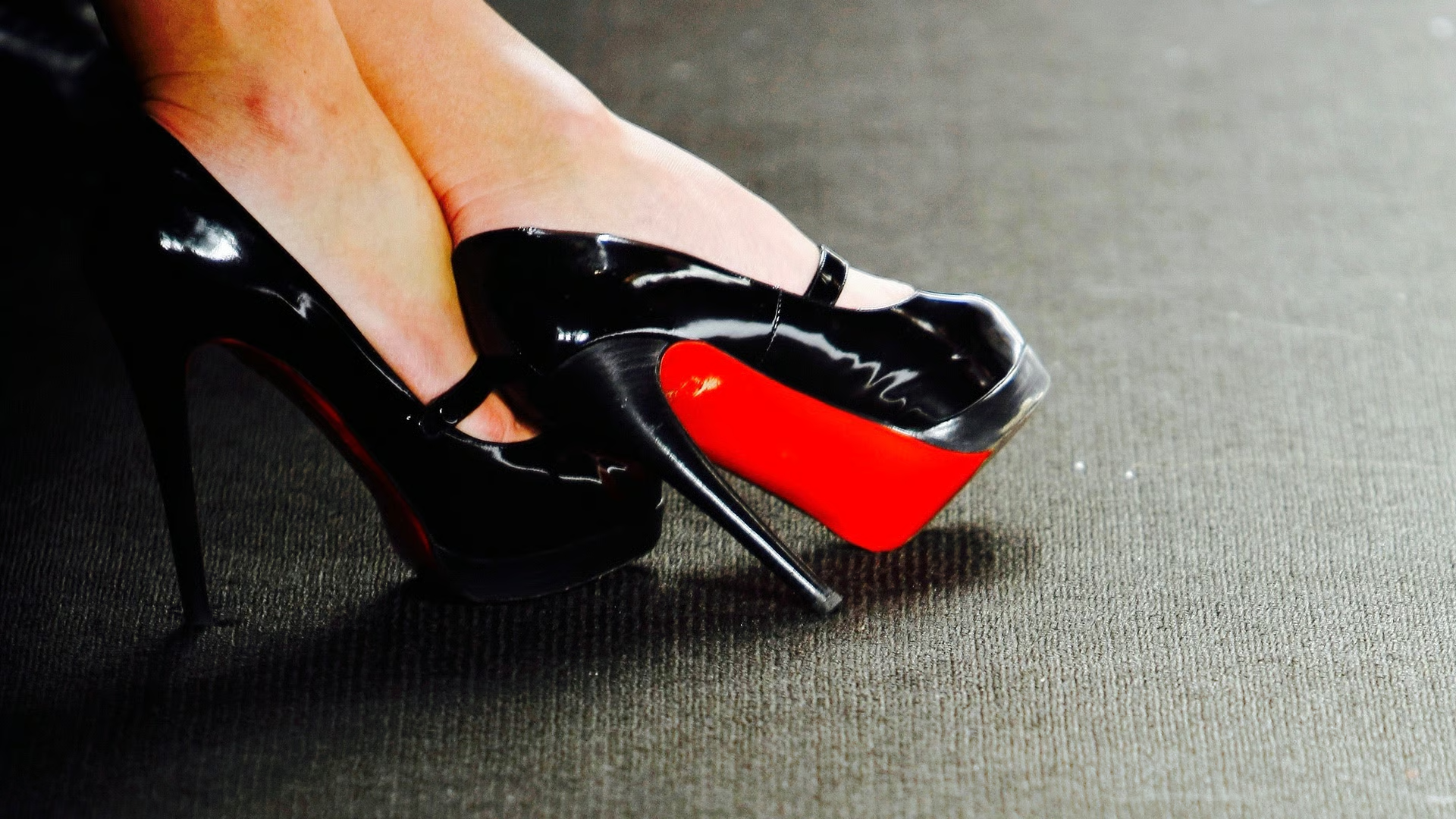
Fashion thrives on cycles, and nostalgia fuels the loop. Maison Margiela just reintroduced the iconic Future sneakers (originally from the SS11 collection) for Spring/Summer 2026. Isabel Marant‘s wedge sneakers (like the Bekett) are making a major comeback, with searches and demand spiking as the divisive 2010s silhouette returns for 2026. Christian Louboutin red bottoms are resurfacing strongly, embraced by a new generation of fans. And early-2010s #swag, Tumblr aesthetics are everywhere online. “2026 is the new 2016”—it’s clear nostalgia is king, and brands are simply tapping into this cyclical hunger for the familiar.


There’s something called the “reminiscence bump”—a psychological phenomenon where songs heard during adolescence create the strongest, most enduring emotional memories and preferences. This is why nostalgia in music hits so hard: it’s memory incarnate, tied directly to identity formation.
Through Season 4 of Stranger Things, we saw Kate Bush’s 1985 track “Running Up That Hill” explode in popularity, with streams surging by over 8,000% (some reports cite even higher spikes) shortly after the season premiered, introducing the song to entirely new generations and pushing it to chart highs decades later. Similarly, Metallica’s “Master of Puppets” (1986) saw massive renewed interest thanks to Eddie Munson’s epic guitar scene in the Upside Down—boosting streams, guitar tutorial searches, and cultural buzz around the band.


Streaming platforms like Spotify have long reported spikes in nostalgic listening. During broader nostalgic campaigns or cultural moments, playlist listens can surge significantly (with historical data showing up to 54% increases in nostalgia-themed playlists during stressful periods). Right now, in early 2026, we’re seeing that in real time: user-generated “2016” playlists have skyrocketed by 790% since January 1, with songs from the 2015–2016 era also rising over 150% in the Global Top 50. Tracks like Justin Bieber’s “Sorry,” Drake’s “One Dance,” and Zara Larsson’s “Lush Life” are flooding feeds again. The 2010s/2016 carefree pop, trap music sound, is dominating as people seek comfort in a simpler-feeling era.
In a world of constant disruption, Nostalgia remains one of the most reliable ways to cut through the noise, build emotional loyalty, and drive real action. Brands that master it—whether through sequels, reissues, samples, or playlists—aren’t just selling products. They’re selling belonging.


