The British Academy Film Awards (BAFTAs), presented by the British Academy of Film and Television Arts, are widely regarded as the UK’s equivalent of the Oscars. First held in 1949 and televised from 1956, the awards honour outstanding British and international contributions to film and television. In 2023, the ceremony moved to the Royal Festival Hall, marking a new era for one of the industry’s most prestigious institutions.
While the BAFTAs position themselves as a global celebration of cinema, African representation within the awards has historically been limited. When recognition has come, it has largely been through the British diaspora rather than through filmmakers working on the continent. Against that backdrop, African wins at the BAFTAs carry weight far beyond individual achievement; they signal rare moments of visibility in a system where African stories remain underrepresented.
The most recent BAFTA Awards marked a significant milestone, with three Africans winning awards in a single night, the strongest showing in the ceremony’s history.
Wunmi Mosaku (Nigeria/UK)

Mosaku won Best Supporting Actress for her role in Ryan Coogler’s vampire horror drama Sinners, making her the first Black British actress to win a BAFTA in this category. A British-Nigerian actress born in Nigeria and raised in Manchester, her win continues a steady run of critical recognition for performances rooted in emotional restraint rather than spectacle.
Akinola Davies Jr. & Wale Davies (Nigeria)
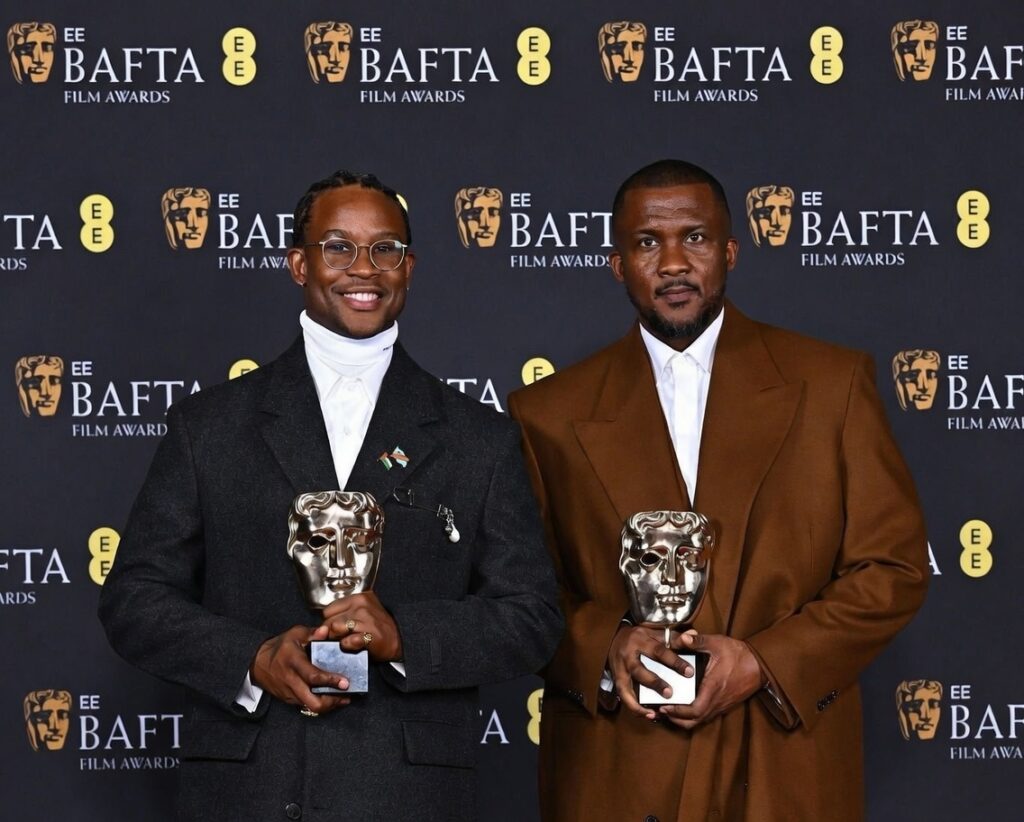
Davies Jr. and Davies won Outstanding British Debut for My Father’s Shadow, becoming the first Nigerian filmmakers to win in this category. The victory marked a historic moment for Nigerian cinema, particularly within a category designed to spotlight emerging voices in British filmmaking.
Chiwetel Ejiofor (Nigeria/UK)

Ejiofor won the BAFTA for Best Actor in a Leading Role in 2014 for 12 Years a Slave. The British actor of Nigerian Igbo descent earned global acclaim for that performance, alongside an Academy Award nomination, and was appointed a Commander of the Order of the British Empire (CBE) in 2015.
Amma Asante (Ghana/UK)

A true pioneer, Asante won the Carl Foreman Award for Special Achievement by a British Writer, Director or Producer in their First Feature (now Outstanding Debut) in 2005 for A Way of Life. Of Ghanaian heritage, Asante was the first Black director to win a BAFTA Film Award for writing and directing a feature film. Her win paved the way for a generation of diaspora filmmakers, proving that stories centering on complex racial and social identities could command the Academy’s highest honors.
Barkhad Abdi (Somalia)
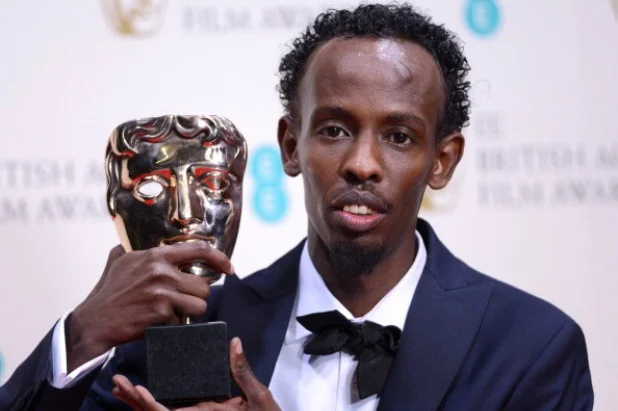
In 2014, Abdi achieved one of the most remarkable debuts in cinema history, winning the BAFTA for Best Actor in a Supporting Role for Captain Phillips. Born in Mogadishu, Somalia, and later moving to the US, Abdi was a limousine driver with no prior acting experience before being cast as the pirate leader Muse. His victory remains a landmark as one of the few instances where an actor born on the African continent has won in a major performance category.
Rungano Nyoni (Zambia/Wales)

Nyoni made history in 2018 by winning the BAFTA for Outstanding Debut by a British Writer, Director or Producer for her feature film I Am Not a Witch. Born in Lusaka, Zambia, and raised in Wales, Nyoni’s work is noted for its sharp satirical lens on Zambian social structures. Her win was a significant moment for the Academy, as it honoured a story deeply rooted in African culture and geography, directed by a filmmaker who maintains strong creative ties to the continent.
Daniel Kaluuya (Uganda/UK)

Kaluuya won the BAFTA Rising Star Award in 2018 and Best Actor in a Supporting Role in 2021 for his portrayal of Fred Hampton in Judas and the Black Messiah. The British actor of Ugandan descent completed a rare awards sweep that year, winning the BAFTA, Academy Award, Golden Globe, SAG Award, and Critics’ Choice Award, the only performer in 2021 to secure all five major film honours.
The EE Rising Star Award honours performers who have captured the attention of both the public and the industry.
 At just 18, Bakray won for her debut role in Rocks. Her win was a cultural phenomenon, highlighting the raw talent within the British-Nigerian diaspora.
 Winning for his role in the Star Wars franchise, Boyega used his platform to consistently champion Nigerian culture and visibility in blockbuster cinema.
African representation at the BAFTAs has long been the exception rather than the norm. For decades, African wins were rare, symbolic, and often isolated. The 2026 ceremony marked a clear shift, with three Africans winning BAFTAs in one night, an unprecedented moment in the awards’ history.
Yet the broader pattern remains telling. Every African BAFTA winner to date has emerged through the British film ecosystem, highlighting both the opportunities created by diaspora pathways and the continued marginalisation of filmmakers working on the African continent.
Progress is real, but it is incomplete. True equity at the BAFTAs will not be measured by milestone wins alone, but by sustained recognition across categories and geographies. Until African stories — told by African filmmakers at home and abroad — are consistently valued on their own terms, these moments will remain breakthroughs rather than norms.