A Pioneering Figure and Visionary Who Transformed Modern African Art.
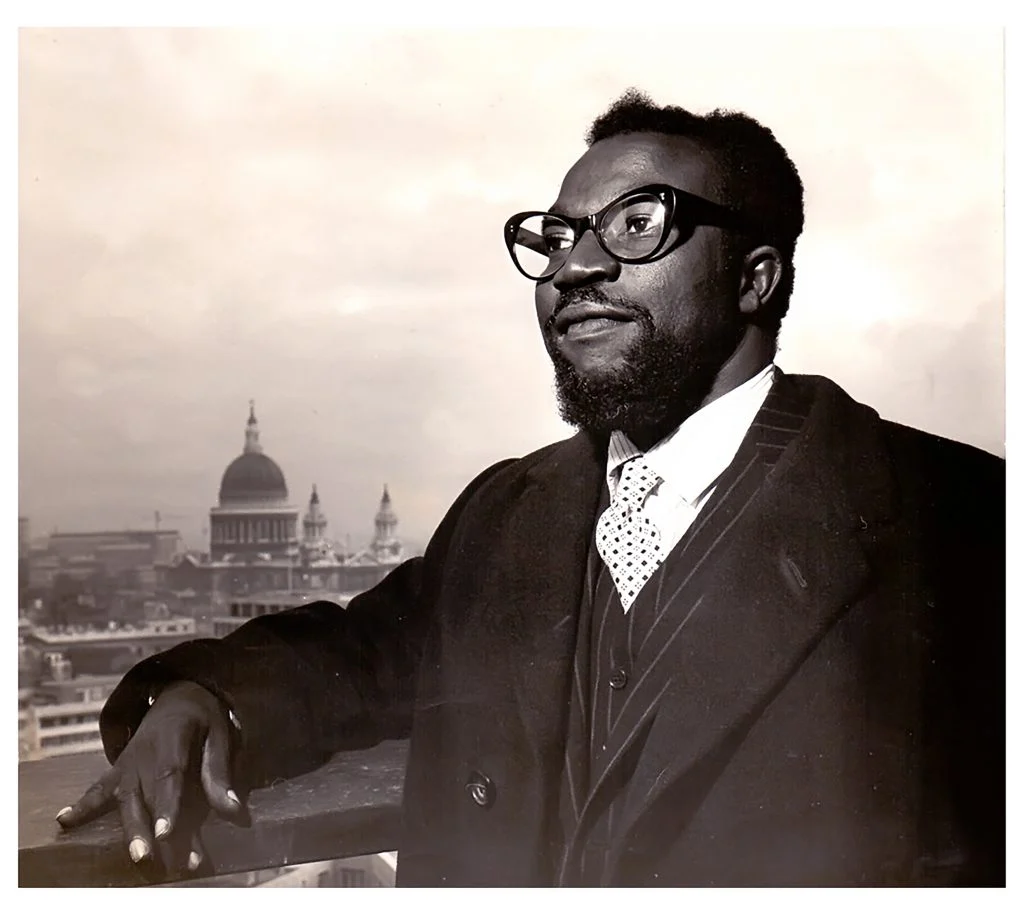
Before Nigerian art found its footing on the global stage, before African modernism became a respected language in international galleries, and long before the world began to seriously reckon with African artistic authorship, Ben Enwonwu was already building the blueprint. His work helped define Nigeria’s cultural evolution.
Born in 1917 in Onitsha, Eastern Nigeria, Benedict Chukwukadibia Enwonwu was raised in a household where art was a living practice. His father, Omenka Odigwe Emeka Enwonwu, was a respected traditional sculptor and chief, and his mother a textile merchant. Through him, Enwonwu was introduced to indigenous Igbo artistic traditions, wood carving, symbolism, and ritualistic aesthetics. This early exposure grounded him in the African visual language. He attended five primary schools, graduated from Government College, Ibadan, and later studied art at Achimota School in Ghana, one of the earliest institutions nurturing modern African artists. His talent earned him a scholarship under a joint Shell Petroleum Company and The British Council, which took him to England to study at the Slade School of Fine Art and University College London.
This moment was critical. Enwonwu became one of the first African artists to receive formal Western academic art training at such a prestigious level. However, the racism he encountered during his stay in England sparked his interest in undertaking postgraduate study focused on the anthropological nature of human societies. He sought a deeper scientific understanding of races, examining their physical and psychological characteristics, cultural customs, and social relationships.
By the 1940s and 1950s, Enwonwu had begun establishing himself internationally. His work explored African identity at a time when colonial rule still defined the continent politically and culturally. His paintings and sculptures reflected movement, cultural identity, and the rhythm of a country on the brink of independence.
Perhaps no work symbolizes his cultural significance more than his sculpture Anyanwu (meaning “Eye of the Sun” or “Sun Goddess”). Created in 1955 and currently displayed on the façade of the National Museum in Lagos, with another version housed at the United Nations headquarters in New York, the bronze sculpture depicts a female figure rising skyward in a gesture of spiritual and cultural awakening. The work has since become one of the most recognizable symbols of African modernism.
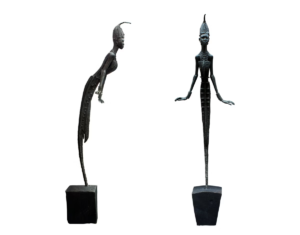
Anyanwu embodied the rising consciousness of a continent approaching independence.
Following Nigeria’s independence in 1960, Enwonwu’s role expanded beyond studio practice. He became a cultural diplomat, tasked with helping shape how the newly independent nation would present itself to the world. He served as Nigeria’s Federal Art Advisor and later chaired the Nigerian Arts Council.
Through these roles, Enwonwu pushed for the institutional recognition of Nigerian art. He advocated for museums, art education programs, and government investment in cultural infrastructure. At a time when many newly independent African nations were focused solely on political and economic rebuilding, Enwonwu argued that cultural identity was equally critical to nation-building.
His influence helped establish art as a central pillar of Nigeria’s post-colonial identity, not a luxury or afterthought.
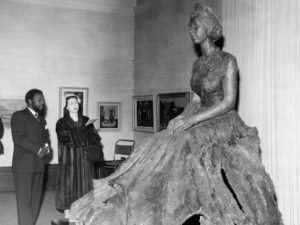
Enwonwu’s global reputation expanded when he sculpted a portrait bust of Queen Elizabeth II in 1956, a commission that placed him firmly in international artistic circles. The project carried layered symbolism, an African artist sculpting the face of British monarchy during the final years of colonial rule. It quietly disrupted colonial hierarchies of artistic authority.
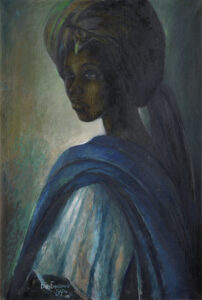
Another defining moment in his career came decades later with his painting series of three portraits of Princess Adetutu Ademiluyi, popularly known as Tutu. Often referred to as Africa’s Mona Lisa, the portraits became cultural artifacts representing both Yoruba royalty and Nigerian national identity. After being missing for decades, one of the paintings was rediscovered in 2017 and later sold at auction for £1,205,000. The rediscovery reignited global interest in Enwonwu’s work, reintroducing his legacy to a new generation and reaffirming his place within the canon of African modern art.
Enwonwu’s most enduring contribution lies in how he reframed African art within modernism. He rejected the notion that African artists needed to imitate Western styles to achieve global relevance. Instead, he fused indigenous aesthetics with contemporary techniques, creating a hybrid visual language that felt both rooted and progressive.
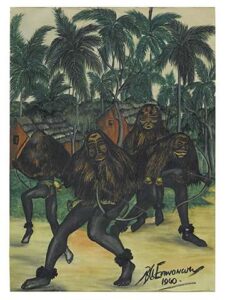
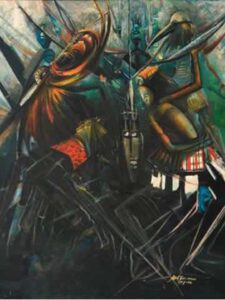
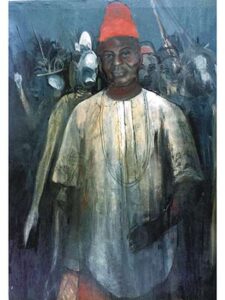
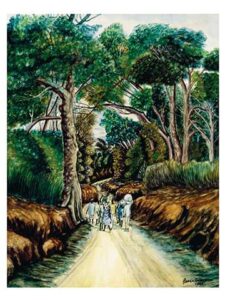
Paintings by Ben Enwonwu / © The Ben Enwonwu Foundation 2026

Sculptures by Ben Enwonwu / © The Ben Enwonwu Foundation 2026
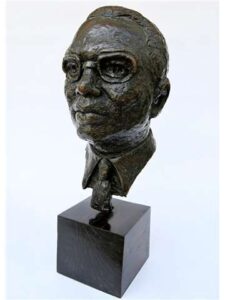
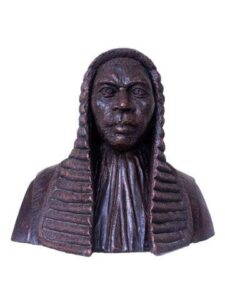
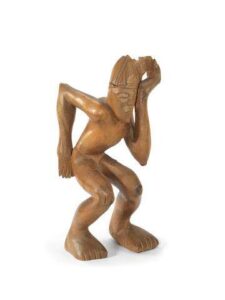
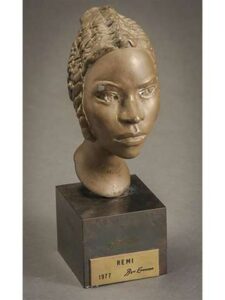
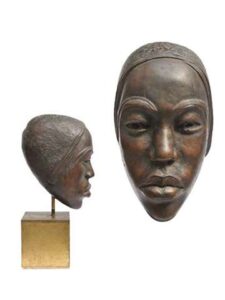
His approach laid the intellectual foundation for generations of Nigerian artists who would follow. From the Department of Fine and Applied Arts at the University of Nigeria, Nsukka, which he helped establish, to contemporary diaspora artists navigating identity and memory, traces of Enwonwu’s philosophy remain visible.
He insisted that African art could be simultaneously traditional and futuristic, local and global. This duality would later become a defining characteristic of Nigerian creative culture across disciplines, fashion, music, film, and visual art.
Like many pioneering figures, Enwonwu’s career was not without critique. Some contemporaries argued that his proximity to colonial institutions and elite patronage complicated his nationalist positioning. Others believed his stylistic fusion leaned too heavily toward Western modernism.
Yet these tensions are part of what makes his legacy complex and historically significant. Enwonwu operated during a transitional period when African artists had to navigate colonial structures while simultaneously dismantling them. His career reflects the contradictions of creating cultural independence before political independence was fully realized.
Ben Enwonwu passed away in Ikoyi in 1994, but his influence continues to reverberate across Nigeria. His work helped legitimize art as a viable professional path in Nigeria, contributing to the emergence of galleries, art fairs, and academic programs that sustain the country’s creative economy today.
More importantly, Enwonwu fundamentally changed how African art is perceived. He shifted it from being viewed as an ethnographic artifact to contemporary intellectual expression. He demonstrated that African artists could be authors of global artistic movements rather than subjects within them.
His legacy extends far beyond galleries or museum halls. In recognition of his contributions to art and culture, the International Astronomical Union named an impact crater on the planet Mercury after him. The honour places Enwonwu among a rare group of globally revered individuals whose influence transcends geography, time, and discipline.

Source: Wikipedia
Ben Enwonwu painted, sculpted, and theorized Nigeria into global artistic consciousness at a time when the world was not yet ready to listen. His work captured a nation imagining itself into existence and gave visual form to the complexities of African modern identity.